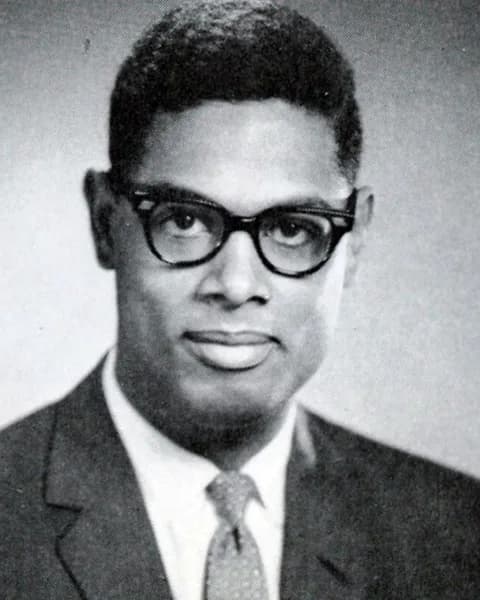
From a homeless shelter in the Bronx to one of the most influential thinkers of the 20th century.
Early Life
1930 – 1948
Born in Gastonia, North Carolina
Thomas Sowell was born into poverty at the outset of the Great Depression. His father Henry died before he was born. His mother Willie, already supporting four other children, placed him with his great-aunt Molly.
“It never occurred to me that we were living in poverty.”
His mother Willie died in childbirth a few years after his birth. Great-aunt Molly, known as 'Mama,' raised him alongside her two adult daughters, Birdie and Ruth. They were part of the first generation of the family born after slavery.
Moves from Charlotte to Harlem, New York
At almost nine years old, Sowell left North Carolina for New York City. The family settled at 720 St. Nicholas Avenue in Harlem, a neighborhood he would later recall as safe enough that residents slept in parks and on fire escapes without fear.
Admitted to Stuyvesant High School
Sowell qualified for the entrance exam to one of New York City's most elite public high schools. But the daily commute from Harlem and a turbulent home life created impossible conditions.
“I entered Stuyvesant High School in February 1945, with great hopes and eagerness.”
After falling ill during his first spring term, being promoted despite missing most of the work, and insisting on repeating the term honestly, the chaos at home made it impossible to continue. He stopped going to school altogether at sixteen.
Odd jobs, machine shops, and a Dodgers tryout
Sowell worked in garment factories, machine shops, and as a Western Union messenger, reading telegrams aloud for immigrants who couldn't read English. He also tried out for the Brooklyn Dodgers, but booted a couple of ground balls at first base.
Leaves home as a 'wayward minor'
After a prolonged battle of wills with his great-aunt, a magistrate finally released him. He'd already moved out, changed jobs, and disappeared into the city. On his first night at a shelter for homeless boys, he put a push-button knife under his pillow.
“There are eight million people in New York. You'll never find me.”
At the Board of Education office, his old truant officer recognized him and sadly shook his head that it had taken so long. Sowell enrolled at Washington Irving High School on the lower east side. Around this time, he discovered Karl Marx.
Military
1951 – 1953
Drafted into the U.S. Marine Corps
Sowell reported to the Selective Service Board in Manhattan. Every fourth set of papers was stamped 'USMC.' When his name was called, he strode forward and accidentally knocked over a chair. The sergeant smiled: 'Oh, you're just the kind of man they are looking for: USMC.'
Photography school in Pensacola, FL
After boot camp at Parris Island, Sowell was assigned to study photography, a skill rooted in a personal passion that would become lifelong. He later served as a Marine photographer in North Carolina.
Honorable discharge from the Marines
After one year, eleven months, and five days of service, Sowell took an early experimental discharge on the 5th of the month instead of waiting for his regular date on the 29th. He used the G.I. Bill for higher education.
Education
1953 – 1968
Howard University: night classes, then full-time
Sowell entered Howard on armed services test scores alone. He had no high school diploma. He studied writing under Sterling A. Brown and grew increasingly frustrated with the university's lack of academic rigor. He wrote a six-page letter to the dean criticizing the institution.
Graduates Harvard magna cum laude in economics
He transferred from Howard aiming high: Harvard, Yale, Wisconsin, Columbia. Harvard accepted him. He started with two D's and two F's on his first exams. Chemistry was his worst: two F's and a D, then near-perfect on the final. By graduation, he'd earned magna cum laude honors with a senior thesis on Karl Marx.
“Do you realize that I could still graduate magna cum laude from this place?”
Columbia University: M.A. in economics in nine months
Sowell came to Columbia specifically to study under George Stigler. Nobody told him Stigler had left for Chicago. He studied under Arthur Burns instead, whose strong recommendation later got him into Chicago. He completed the master's degree in the minimum time possible.
Begins doctoral study at the University of Chicago
Sowell arrived at the most famously free-market economics department in the country, arriving as a Marxist. He studied under George Stigler and Milton Friedman, both future Nobel laureates. He valued Chicago's combative, evidence-based culture over status and credentials.
“I was aware that the University of Chicago economics department had a reputation for conservatism… and I was a Marxist.”
Department of Labor: the moment everything changed
Hired as a GS-9 economist in the Wage and Hour Division, Sowell was assigned to research applying the Fair Labor Standards Act to agriculture. He prepared material for Secretary of Labor Arthur Goldberg's Congressional testimony. Given four Census Bureau datasets (two supporting the department's position and two contradicting it), he reported honestly. The higher-ups edited out the inconvenient data before presenting to Congress. This experience began the destruction of his Marxist worldview.
“I had remained a Marxist, despite being at the University of Chicago, but now my experience in Washington began a process of changing my mind completely as to how to deal with social problems.”
Full-time labor economist at the Department of Labor
After the summer that changed his thinking, Sowell continued at the DOL. He made such an impression that after he left, a new hire who questioned the Bureau of Labor Statistics' methods was told: 'Oh, God! Another Tom Sowell!'
Academic Years
1962 – 1980
Instructor at Douglass College, Rutgers
Sowell's first academic teaching position. He taught labor economics and introductory economics. The beginning of a pattern: teach, clash with the institution, move on.
Lecturer at Howard University, clashes over standards
Sowell returned to his alma mater to teach. When an administrator suggested he lower his standards for students' 'backgrounds,' he refused. He was offered the department chairmanship and turned it down.
“If you think I'm not doing my job, you can have my resignation anytime.”
— Hoover Institution interview
Economic analyst at AT&T
A detour from academia into the corporate world. Sowell wrote an article on international balance-of-payments for the company magazine, later recommended by a specialist as 'a good introduction for laymen.'
Assistant professor at Cornell University
The lightest teaching load he'd ever had. He directed a Rockefeller Foundation summer program for black students that raised their GRE economics scores by 70 points in 28 sessions, a result no other program matched.
Earns PhD from the University of Chicago
His dissertation on Say's Law and the general glut controversy was years in the making. The defense itself took fifteen minutes: ten minutes of presentation, five minutes of questions. He had the degree mailed to him, like his previous degrees from Harvard and Columbia.
Cornell armed student takeover at Willard Straight Hall
A group of black students seized a campus building during Parents Weekend, armed with shotguns and rifles. State police cars lined the routes to campus. The administration capitulated to demands. Sowell watched the institution he'd served abandon its integrity in real time.
Resigns from Cornell with a one-sentence letter
He was told he had 'a great future' at Cornell: promotion, tenure, matching any outside offer. The catch: don't wash the university's dirty linen in public. He called the Rockefeller Foundation and told them everything instead.
“I had learned the futility of trying to talk sense to people who don't want to hear it.”
A brief stop. Better atmosphere than Cornell, but Massachusetts prices on an academic salary pushed him to keep looking.
UCLA: associate professor, then full professor
A Chicago-influenced economics department with combative intellectual culture. Sowell became full professor in 1974 but grew increasingly dissatisfied with teaching large undergraduate classes versus the lively engagement he found on the lecture circuit.
Publishes Say's Law and Black Education: Myths and Tragedies
His dissertation expanded into a book-length history of classical economics. The same year, Black Education marked his first major critique of lowered academic standards, a theme he'd revisit for the next fifty years.
Project director at the Urban Institute
Another position inside the policy machinery, this time at a Washington think tank focused on social policy research. More direct exposure to how policy research is commissioned, framed, and used.
Public Intellectual
1975 – 1995
Publishes Race and Economics
The book that linked racial outcomes to economic history and comparative group experience, pushing back against single-cause narratives. A young congressional aide named Clarence Thomas would later describe reading it as 'a thirsty man gulping down a glass of cool water in the desert.'
Meets Clarence Thomas at Washington University in St. Louis
At a law school symposium, a young black man came up and asked Sowell to autograph his copy of Race and Economics. Years later, that man showed Sowell the same signed copy from his office in Washington. His name was Clarence Thomas. Also on panels that day: Ruth Bader Ginsburg and Antonin Scalia.
“One-third of a future Supreme Court was in that room that day.”
The book argues that decision-making becomes dangerously separated from on-the-ground knowledge in large organizations and government. It won the Law and Economics Centre Prize and led directly to his appointment at the Hoover Institution.
The longest job he ever held. No teaching required, just pure research and writing. The position that would define the rest of his career, spanning more than four decades.
“My position at Hoover was the longest job I ever held… it would allow me entirely to research.”
— Hoover Institution interview (2024)
Black Alternatives Conference at the Fairmont Hotel
Sowell organized a gathering of over 100 Black professionals (academics, journalists, businessmen) in San Francisco. A young Clarence Thomas attended as a congressional aide. Thomas later called the conference 'a home' for those who had 'wandered in the desert of political and ideological alienation.'
Ethnic America traced how multiple U.S. ethnic groups adapted economically over time. Around this period, Sowell declined offers to serve as Secretary of Education under Reagan and as Federal Trade Commissioner, choosing intellectual independence over political power.
Begins syndicated newspaper column
The start of a 32-year run as a nationally syndicated columnist, eventually appearing in over 150 newspapers via Creators Syndicate. Short-form argument at its finest. Sowell credited George Will with proving substance could be conveyed in 750 words.
Publishes A Conflict of Visions
Introduces the 'constrained' vs. 'unconstrained' vision framework, an organizing lens for understanding political disagreements that goes deeper than left vs. right. Arguably his most intellectually influential book.
A full-scale attack on the self-protecting mindset of policy elites, 'the anointed,' who substitute moral certainty and rhetorical framing for accountability and results. One of his most-quoted and most-shared books.
Sparked by his son John, who didn't speak until nearly age four but demonstrated advanced analytical skills. A newspaper column about John generated dozens of responses from parents. Sowell formed a 55-family support group and opened an entirely new field of research.
Basic Economics became a citizen's guide to the economy, updated through multiple editions. A Personal Odyssey, his autobiography, is the most direct narrative record of his life and the primary source for this timeline.
Awarded by President George W. Bush for his contributions to the humanities.
Publishes Black Rednecks and White Liberals
A collection of essays arguing that certain cultural patterns attributed to race have historical roots in specific regional cultures, not in racial identity. One of his most controversial and most widely shared works.
At age 86, Sowell published his farewell column. He cited a desire for more time on photography and longer research projects. The column had run in over 150 newspapers.
“After a quarter of a century of writing this column, I have decided to stop. Age 86 is well past the usual retirement age, so the question is not why I am quitting, but why I kept at it so long.”
— Farewell column, Creators Syndicate
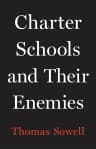
Publishes Charter Schools and Their Enemies on his 90th birthday
Released on the day he turned 90. The book argues that charter school performance, especially among poor and minority students, undercuts prevailing education dogmas, and that unions and political incentives are the central obstacles.
PBS documentary: Common Sense in a Senseless World
Hosted by journalist Jason Riley, the documentary brought Sowell's life story to a mass television audience, reaching people who may never have encountered his books or columns.
Publishes Social Justice Fallacies at age 93
A late-career synthesis arguing that much contemporary 'social justice' discourse relies on definitional slippage and empirically unsupported claims. Published at 93 years old. Still writing, still fighting.
Records 'A Free Man' interview with Hoover at age 94
A full-arc life interview filmed at the Hoover Institution, capturing Sowell recounting key episodes in his own words: from Harlem to Chicago to the Department of Labor to the present. Published October 2025.
Launches Facts Against Rhetoric at age 94
At 94, Sowell launches Facts Against Rhetoric, a new website dedicated to empirical thinking and intellectual clarity.
Rose and Milton Friedman Senior Fellow, Emeritus, age 95
Still at the Hoover Institution. Author of dozens of books spanning economics, social policy, ethnicity, education, and intellectual history. From a homeless shelter in the Bronx to one of the most influential thinkers of the 20th and 21st centuries.
ReadSowell.com launches
A community of 165,000+ fans begins building the most comprehensive Thomas Sowell resource on the internet.
Why Thomas Sowell Matters
Thomas Sowell has written over 40 books. He’s been a Marine, a Harvard graduate, a Marxist, and a University of Chicago economist. The Marxism ended when he got a job in government and saw how little anyone cared whether their programs actually worked. He spent the next sixty years following the evidence wherever it pointed, no matter who it made uncomfortable. He turned 95 in 2025. The people in charge still haven’t caught up.